


Where Mobile Biochar Machines Fit: Key Application Scenarios
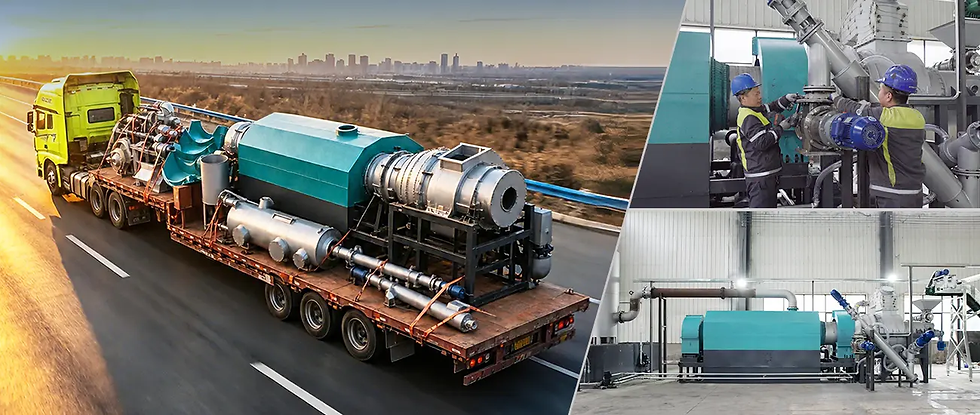
Mobile biochar machines are designed for situations where biomass is dispersed, difficult to transport, or available only for a limited period. Unlike a fixed biochar production facility, a mobile system can be deployed closer to the feedstock source. This reduces the need to haul bulky biomass over long distances and allows biochar production to follow the distribution of available residue.
The application value of a mobile system therefore depends largely on feedstock geography, project scale, operating conditions, and the intended use of the resulting biochar.
Agricultural Residue Management
Agricultural residue is one of the most direct application scenarios for mobile biochar machine. Crop production generates straw, husk, stalk, pruning residue, and other lignocellulosic material across widely distributed farming areas.
Transporting this material to a centralized facility can be costly because agricultural residue often has a low bulk density. A mobile biochar machine can be positioned near the collection area and process the residue locally.
This model can shorten the material handling chain. It can also reduce temporary residue accumulation after harvest. Instead of moving all biomass to a distant processing plant, part of the material can be converted near the point of generation.
Forestry and Woodland Residue
Forestry operations generate branches, bark, tops, thinning residue, and other woody material that may be scattered across large areas. Conventional centralized processing requires collection and transportation before conversion.
A mobile biochar machine provides a different logistical configuration. The equipment can be transported to a suitable operating location near the forest residue and relocated as the available feedstock changes.
This approach is particularly relevant where road access is available but long-distance biomass transportation would undermine project economics. Processing residue closer to the source can reduce haulage requirements and create a more localized material flow.
Forest Management and Residue Reduction
Mobile biochar production can also form part of forest management programs. Thinning and vegetation management generate biomass that may otherwise require removal, stockpiling, or alternative disposal.
On-site or near-site thermal conversion can reduce the volume of residue that needs to leave the management area. The resulting biochar can then be transported separately because its bulk characteristics differ substantially from the original biomass.
Distributed Carbon Removal Projects
Biochar carbon removal projects do not always have access to a single concentrated biomass source. Agricultural land, forestry operations, and biomass-processing sites may be geographically dispersed.
Mobile equipment can support a distributed production model. Multiple feedstock locations can potentially be served by the same production unit over different operating periods.
This model requires careful scheduling. Feedstock availability, equipment relocation, site preparation, utility access, storage, and production capacity must be coordinated. The mobility of the equipment does not eliminate logistical requirements. Instead, it changes where those requirements are managed.
For carbon removal applications, traceability also becomes important. Feedstock origin, processing conditions, biochar quantity, and final carbon storage should remain documented across different operating sites.
Farms and Agricultural Enterprises
Individual farms and agricultural enterprises can use mobile biochar equipment when biomass is generated continuously or seasonally within their own operations.
A farm may process pruning residue, orchard waste, crop residue, or other suitable biomass without establishing a large centralized processing plant. The resulting biochar may be used within the farm's own material cycle or supplied to a downstream market.
This model can reduce dependence on external waste disposal while creating an additional product stream. However, feedstock consistency and machine utilization should be assessed before deployment. A small biomass reserve may not provide enough operating hours to justify dedicated equipment.
Industrial Biomass Waste
Mobile biochar machines can also serve decentralized industrial biomass sources. Sawmills, wood-processing facilities, agricultural processors, and other enterprises may generate residue at multiple locations.
A mobile unit can be deployed where sufficient material is available and moved when the local feedstock supply declines. This is useful for businesses that do not generate enough residue at one site to justify a permanent large-scale facility.
The economics depend on the balance between equipment utilization and transportation savings. Frequent relocation can increase setup requirements, while insufficient operating hours can reduce asset productivity.
Seasonal and Temporary Feedstock Sources
Some biomass streams are highly seasonal. Harvest residue, pruning material, and forestry operations may create large quantities of feedstock within a narrow time window.
A mobile system can be deployed during these periods and moved to another location afterward. This provides greater operational flexibility than equipment permanently tied to one feedstock source.
The same principle applies to temporary biomass accumulation caused by land clearing, storm damage, or scheduled vegetation management. In these cases, mobility can help match processing capacity with short-lived feedstock availability.
A Flexible Model for Decentralized Biomass
The principal application value of a mobile biochar machine lies in its ability to bring processing capacity closer to dispersed biomass. Agricultural residue, forestry material, farm waste, industrial biomass, and seasonal feedstock can all create situations where transportation becomes a significant part of project economics.
However, mobility should not be treated as an automatic economic advantage. Site accessibility, feedstock preparation, operating hours, utility requirements, storage, relocation frequency, and biochar demand must be evaluated together.
When these factors align, mobile biochar production can provide a flexible route for converting geographically dispersed biomass into a standardized carbon-rich product while reducing the logistical burden of centralized processing.
Comments