


Optimizing Equipment Costs for Biochar Carbon Removal Projects
Equipment expenditure is a major investment component in a biochar carbon removal project. The selected production system influences not only initial capital requirements but also feedstock throughput, energy consumption, biochar consistency, maintenance demand, and carbon removal performance. Cost optimization therefore requires more than negotiating a lower equipment price. It involves matching the technical configuration to project requirements while avoiding unnecessary capacity, excessive auxiliary systems, and costly operational constraints.
A well-designed equipment package should support reliable biochar production and generate the process data required for carbon accounting and verification. Evaluating costs across the equipment lifecycle provides a more realistic basis for investment decisions.
Define Equipment Requirements Before Selecting a Configuration
The first step is to establish the project's production objectives. These include annual biochar output, feedstock type, operating hours, target product specifications, site conditions, and the intended carbon removal methodology.
Different biomass materials require different processing arrangements. Wood chips, sawdust, rice husk, coconut shell, and agricultural residue vary in moisture content, particle size, bulk density, and ash composition. These properties influence drying requirements, feeding stability, reactor capacity, and thermal performance.
Biochar equipment selection should follow feedstock characterization rather than rely solely on nominal capacity. For example, a system designed for dry wood chips may require additional pretreatment or feeding modifications to handle wet, low-density agricultural residue. Specifying these requirements early helps prevent expensive retrofits after installation.
The project should also distinguish between biochar production capacity and verified carbon removal volume. A higher equipment throughput does not automatically produce a proportional increase in eligible carbon removal. Feedstock sustainability, process emissions, biochar properties, transport, and qualifying final storage all affect the amount of carbon that can be credited.
Optimize Reactor Capacity and Production Line Design
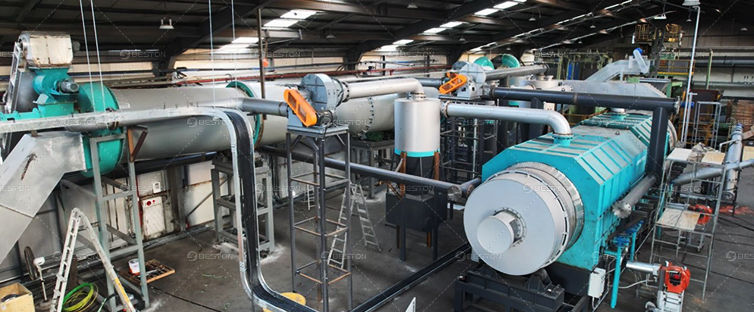
Oversizing pyrolysis equipment can increase capital expenditure, utility demand, and maintenance requirements without generating sufficient additional output. Undersizing can create bottlenecks when feedstock supply and market demand exceed the system's practical capacity.
A realistic capacity calculation should consider annual feedstock availability, operating days, planned maintenance, preparation time, and expected equipment availability. Seasonal supply fluctuations should also be included. A project relying on agricultural residue may need sufficient storage or a flexible operating schedule to accommodate harvest cycles.
Avoid Unnecessary Equipment Redundancy
The production line should be configured around the actual material flow. Depending on feedstock characteristics, pretreatment may include drying, crushing, screening, or conveying. Each auxiliary unit should have a clear operational purpose.
Excessive equipment redundancy increases procurement and maintenance costs. However, removing essential buffer storage, safety devices, or material-handling capacity can cause frequent interruptions. The objective is to establish a balanced configuration in which the reactor, feeding system, cooling equipment, gas treatment, and biochar handling operate at compatible capacities.
Evaluate Energy Recovery and Auxiliary System Efficiency
Energy consumption is a recurring cost that can materially affect project economics. The carbonization process requires heat to dry and thermally decompose biomass under controlled oxygen-limited conditions. Electricity is also needed for motors, fans, pumps, conveyors, and control systems.
Equipment cost optimization should therefore consider thermal insulation, heat transfer efficiency, combustion control, and process gas recovery. Combustible gas generated during carbonization may be used as supplementary process fuel when its composition, heating value, and flow characteristics are suitable.
A properly integrated heat recovery system can reduce external fuel demand. However, additional equipment should be justified by its expected energy savings. Gas cooling, dust removal, pressure regulation, and combustion equipment introduce their own capital and maintenance costs. Their sizing should reflect actual process requirements rather than theoretical maximum performance.
Integrate Environmental Protection and Carbon Monitoring
Environmental and monitoring systems should be included in the initial equipment plan. Retrofitting them later can increase installation costs and interrupt production.
Depending on feedstock, process design, project capacity, and local permits, the facility may require particulate collection, exhaust treatment, condensate management, and emissions monitoring. The treatment configuration should be based on process characterization and applicable regulatory limits.
Carbon removal projects also require reliable data collection. Relevant records may include feedstock quantity and origin, operating temperature, processing duration, energy use, biochar output, and product test results. Digital monitoring can reduce manual recording and improve data consistency, but it does not replace methodology compliance, independent verification, or required laboratory analysis.
Equipment should provide suitable measurement points and data interfaces from the outset. This can reduce later modification costs and support more efficient monitoring, reporting, and verification.
Reduce Lifecycle Costs Through Maintainable Equipment Design
The purchase price represents only part of the equipment cost. Maintenance, spare parts, downtime, and component replacement influence the total cost of ownership.
Critical inspection points include the reactor shell, feeding and discharging mechanisms, drive system, seals, gas pipelines, condensers, pumps, fans, and instrumentation. Equipment with accessible inspection points and standardized components can simplify routine servicing.
Preventive maintenance also protects production availability. Unplanned shutdowns can create additional labor costs, disrupt feedstock logistics, and delay biochar delivery. A maintenance plan based on operating hours and equipment condition helps identify deterioration before it develops into a major failure.
When comparing suppliers, project owners should examine manufacturing quality, material specifications, welding procedures, quality-control records, spare-part availability, and technical support. A lower quotation may prove more expensive if it involves frequent component replacement or limited after-sales assistance.
Assess Supplier Capability and Project Integration
Equipment procurement should include a technical review of the complete production package. Important documents include process flow diagrams, equipment layouts, utility requirements, material and energy balances, and component specifications.
Supplier capability also matters. Manufacturing facilities, engineering resources, testing procedures, and commissioning support can influence delivery quality and project risk. Pilot testing is particularly valuable when feedstock characteristics or target biochar specifications are uncertain.
A clearly defined scope of supply helps prevent cost overruns caused by omitted conveyors, electrical systems, foundations, installation materials, or environmental equipment. Responsibilities for installation, commissioning, operator training, and after-sales service should also be established before contract execution.
Build an Equipment Budget Around Project Performance
Effective equipment cost optimization balances capital expenditure, operating efficiency, equipment availability, and carbon removal requirements. The lowest initial price is not necessarily the most economical option over the project lifecycle.
A robust investment model should compare total equipment cost with realistic production output, energy demand, maintenance expenditure, and verified carbon removal potential. By selecting capacity according to feedstock supply, integrating essential auxiliary systems, and planning for long-term maintainability, project developers can control investment risk while establishing a dependable foundation for biochar carbon removal.
Comments